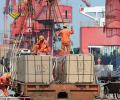
Import segments which recorded negative growth include gold, silver, transport equipment, coal, fertiliser, machinery and machine tools. However, exports of oil seeds, coffee, rice, tobacco, spices, pharma, and chemicals reported positive growth in June.

The government has decided to postpone the release of the new Foreign Trade Policy (FTP) and extend the existing one by six months on account of global uncertainties and currency fluctuations. The government was scheduled to announce the new FTP by the end of September. The current policy was to end on September 30.
Prime Minister Narendra Modi had asked exporters to prepare a strategy for the next five years and start working in that direction.

Work on a dozen decisions to start by next week.

Another priority in the first 100 days could be the launch of an e-platform -- Trade Connect -- to help exporters connect with stakeholders of international trade.

The apparel and engineering sectors have already witnessed the trend in the past one week. If this continues, it can have an impact on the overall export demand in the coming months, considering that Europe is the largest national export market for India.
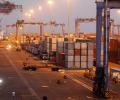
According to Ajai Sahai, director-general and CEO of Federation of Indian Export Organisations, rising cases are a cause for concern as it adds to the uncertainty and may impact exports.

Even as the industrial cycle has ground to a halt during the 21-day lockdown, the industry has been hit hard by foreign orders from major clients in the US and Europe being cancelled. Also, a sudden lack of labour has crippled the sector because of a mass exodus of workers from industrial units to the hinterland.

'In my 26 years at Raj Bhavan, working with more than ten governors, I can tell you C P Radhakrishnan Sir stands out.'

Vice President Bhairon Singh Shekhawat on Saturday asked the gem and jewellery exporters to create brand India image by improving product quality with the use of latest manufacturing technology.

Last fiscal, diamonds worth about $900 billion were sold globally of which those worth about $20 billion came back to India for recycling.

'Obviously, MSP hike raises chances of a reduction in exports. Even without an MSP hike, India's exports of a number of agri-commodities, like sugar, were unviable in the overseas markets.'
Global jewellery major Tiffany is exploring the possibilities of setting up a processing unit for diamonds in India.\n\n

For the first time, the event will take place across three locations in Delhi: Bharat Mandapam at Pragati Maidan, Yashobhoomi Convention Centre at Dwarka, and India Expo Mart at Greater Noida.
India has offered African countries --Botswana, Angola, South Africa and Namibia, incentives to strengthen their jewellery industry in return for direct procurement of rough diamonds from these countries.

While sales in the domestic market declined 4.2 per cent during the April-July period, exports grew steadily at 9.5 per cent during the same period.

Exporters believe the situation will also have a grave outcome for employment, with large numbers of casual laborers looking at no work, as well as downstream units facing a loss of work, reports Subhayan Chakraborty.
India can capture a major share of the $1.5-billion US import market for plastic products, according to a study.
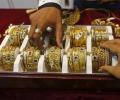
India and China are together expected to equal world's largest jewellery market, the United States, by 2015 when the global gems and jewellery trade is expected to touch $230 billion, states a new industry report.

The fall in exports of gems and jewellery exports is mainly because of shortage of raw-material for jewellery manufacturing.

Gold, a safe-haven bet, is likely to continue its record-smashing journey in the New Year, rising to Rs 85,000 per 10 grams and even Rs 90,000 level in domestic markets if geopolitical tensions and global economic uncertainties continue.

It may touch Rs 19,800 crore.
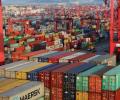
Imports during October also rose by 17.62 per cent to $44.11 billion, leading to widening of trade deficit to $17.13 billion.
Imports also fell for the eighth consecutive months, down 0.75 per cent to $41.14 billion in January, widening the trade deficit to a seven-month high of $15.17 billion.

Exports of 13 APIs - including paracetamol, tinidazole, metronidazole, vitamin B1, vitamin B6, vitamin B12, acyclovir, progesterone - along with formulations made from these APIs, would be restricted.

After recording positive growth in September, India's exports declined 5.4 per cent to $24.82 billion in October on account of dip in shipments of petroleum products, gems and jewellery, leather, and engineering goods. Trade deficit in October narrowed to $8.78 billion as against $11.76 billion, as imports also fell 11.56 per cent to $33.6 billion during the month under review.

The product was banned for export earlier, but has now been moved to the restricted category, under which an exporter would have to seek a licence from the government for shipments.

India imports gold worth $26 bn in Apr-Dec period.

Engineering Export Promotion Council (EEPC) of India has urged the Centre to extend lower corporate tax benefit to Limited Liability Partnerships (LLPs) and proprietary firms as it would make funds available with MSMEs and boost private investment cycle. A body of direct tax professionals also sought for reduction of tax burden on individuals and requested the government to raise the income tax exemption limit at Rs 2.5 lakh to Rs 4 lakh per annum in the upcoming budget for 2022-23 fiscal. EEPC India chairman Mahesh Desai claimed around 84 per cent of small businesses are being denied the benefit of lower corporate tax which was aimed at providing industrial units with more investible surplus.
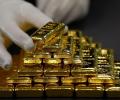
Gems and Jewellery Export Promotion Council (GJEPC) has urged the government to reduce import duty on gold to 4 per cent from 7.5 per cent and a special package for the sector in the forthcoming Budget to boost shipments. As part of its pre-Budget recommendations, the council has also suggested a reduction in the import duty on cut and polished diamonds; cut and polished precious and semi-precious gemstones from 7.5 per cent to 2.5 per cent. "If (gold) imported at 4 per cent duty rate....working capital amounting to Rs 225 crore would be blocked instead of Rs 500 crore," the council said in a statement.

India will be able to bag extra orders worth $three billion for garment exports from the European Union, if the country enters into a Free Trade Agreement with the EU, apparel exports body said on Monday.
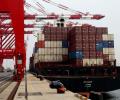
Demand will boom in the US and China, but exporters say it will be difficult for India to tap these markets.

All-party parliamentary delegations on Friday met leaders and diplomats from several countries to galvanise international action against terrorists and decisively counter the tactics of those who perpetrate, support and sponsor cross-border terror activities against India.
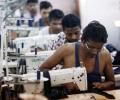
Interestingly, none of the top large apparel exporting countries, including the US, saw any significant jump in shipment to the UAE

Gems and jewellery exports are set to rise 17.8 per cent to $33 billion.

After contracting for six months in a row, the country's exports grew by 5.27 per cent to $27.4 billion in September, Commerce and Industry Minister Piyush Goyal said on Thursday.

Many economists say only a substantial rise from October would point to a real recovery.

Top government officials in New Delhi have started discussions with stakeholders ranging from shipping and container companies to export promotion councils to understand the impact of the Iran-Israel tensions and plan ahead. Inter-ministerial talks are also being lined up amid the crisis situation in West Asia, sources confirmed. While the crude flows are not directly under any threat, elevated oil prices remain a concern, according to officials.

The country's textile industry is concentrated in a few pockets of Gujarat and Maharashtra in the west and Tamil Nadu and Karnataka in the south.
 © 2026 Rediff.com - Advertise with us - Disclaimer - Privacy Policy - Sitemap - Feedback - About us - Terms of use - Grievances